Sealing the tank access hatch
The hatch over the water and fuel tanks was removed and cleaned. The old gasket was replaced with adhesive rubber, the timber joints were sealed with Sikaflex 591 and the raised sections were secured again.
After years laid up, Lady Cila is preparing for a new chapter. In Faro, an extensive restoration is bringing this yacht with a past closer to the sea again.
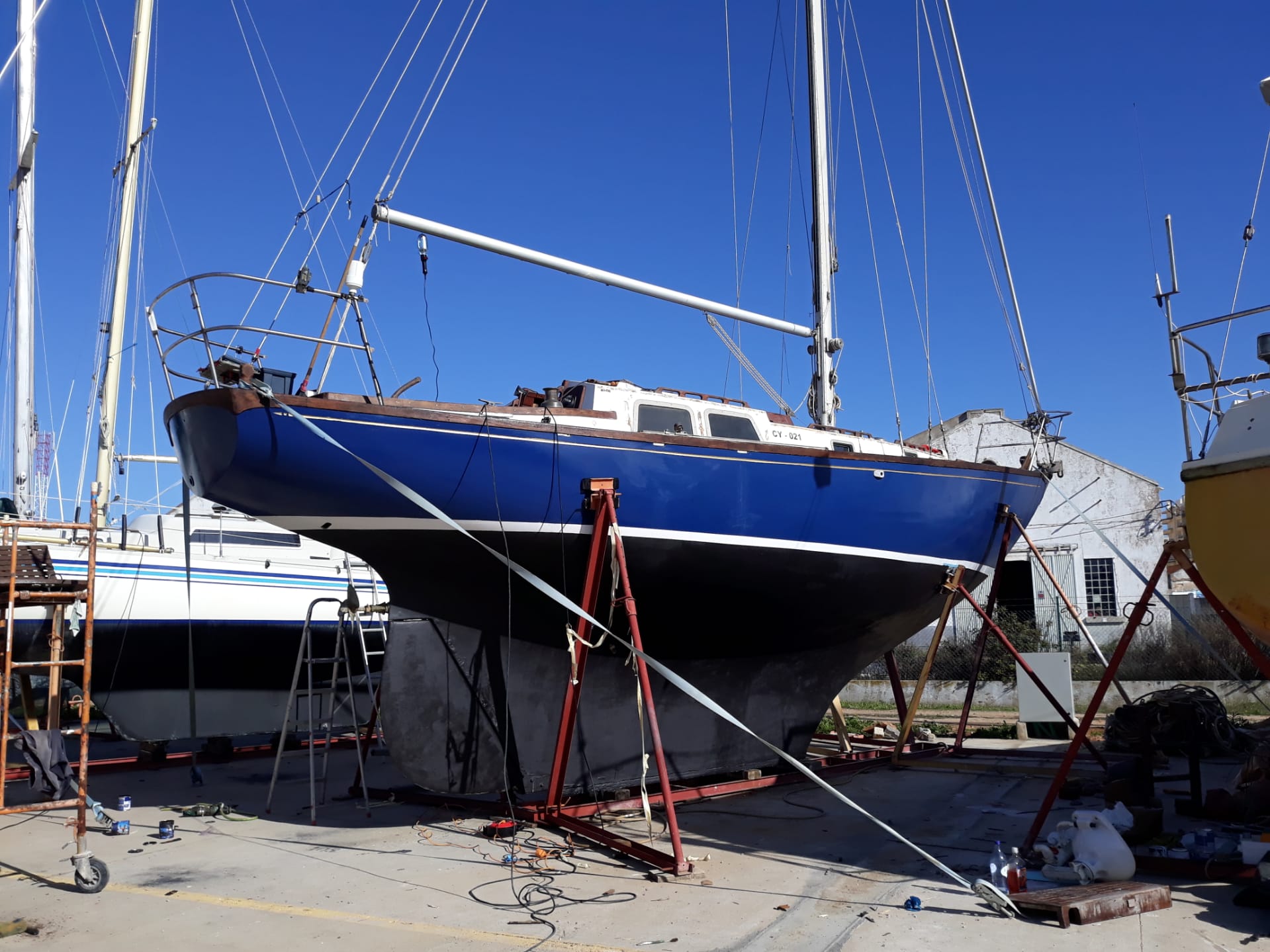
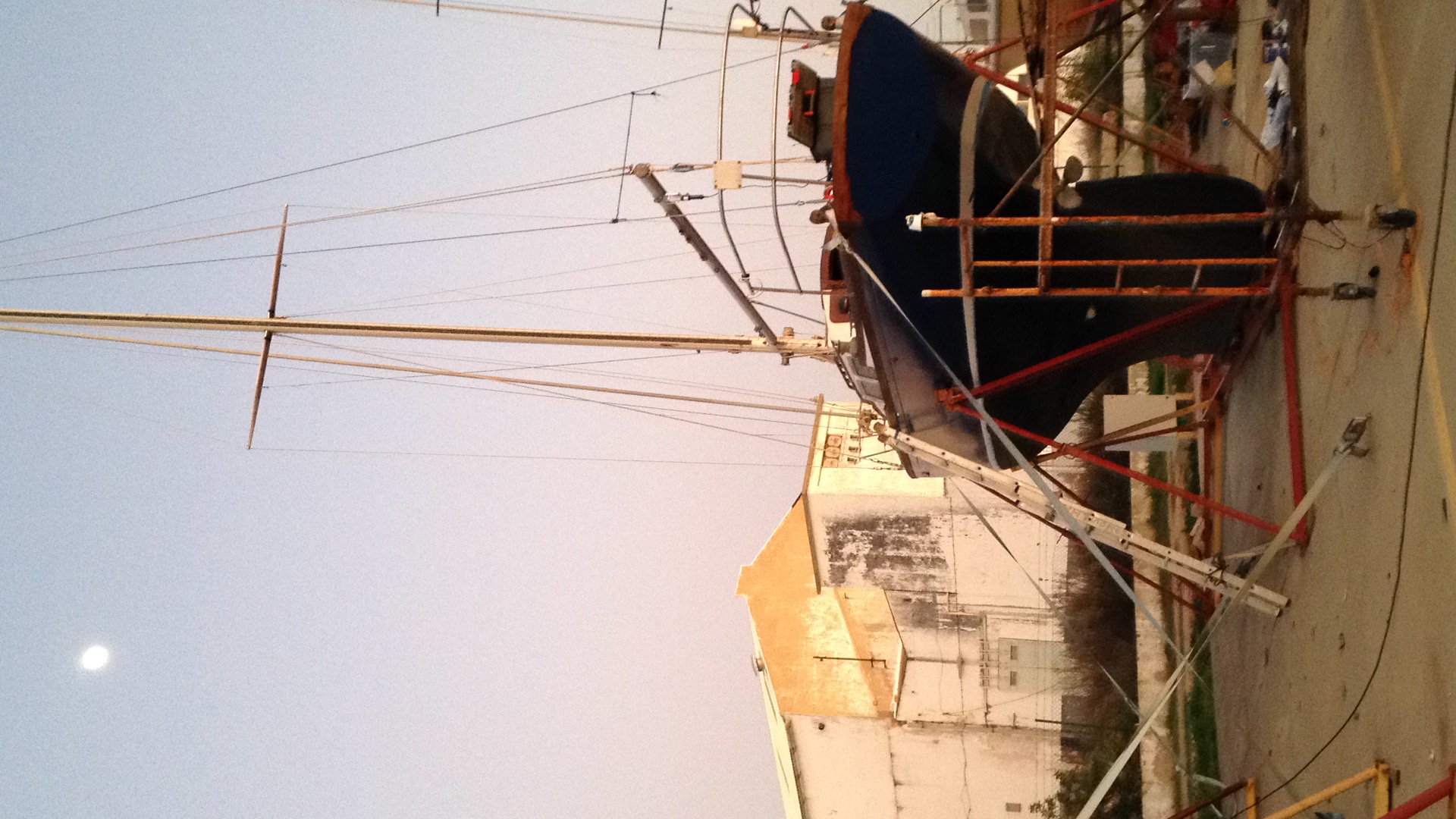
On land at the Nave Pegos boatyard in Faro, Lady Cila is preparing to return to the sea. The project includes work on the deck, a rethought interior and renewed systems aboard.
This logbook records the decisions and work as the restoration unfolds.
Before she became Lady Cila, this yacht was called CASCADE. That name belongs to her history and will always remain part of it. But as I began to imagine her restoration, I felt the boat needed a name that would also tell the story now beginning.
Lady Cila takes her name from my mother, Domicília. It is a simple, deeply personal tribute: a way to carry with me someone who holds such an important place in my life.
A boat carries traces of the people who have passed through her life. She holds voyages, years laid up, work still to be done and stories we may never know in full. Lady Cila carries all of that with her. I do not want to erase her past; I want to care for it and give it a future.
Today she is ashore at the Nave Pegos boatyard in Faro, undergoing an extensive restoration. Every decision — from the deck to the interior, from the onboard systems to the smallest finishing touches — brings her closer to the day she returns to the sea. When that day comes, her name will carry more than the story of a yacht. It will carry my mother, too.
From CASCADE to Lady Cila: a change of name and the beginning of a new chapter. For me, above all, it is a tribute that will sail.
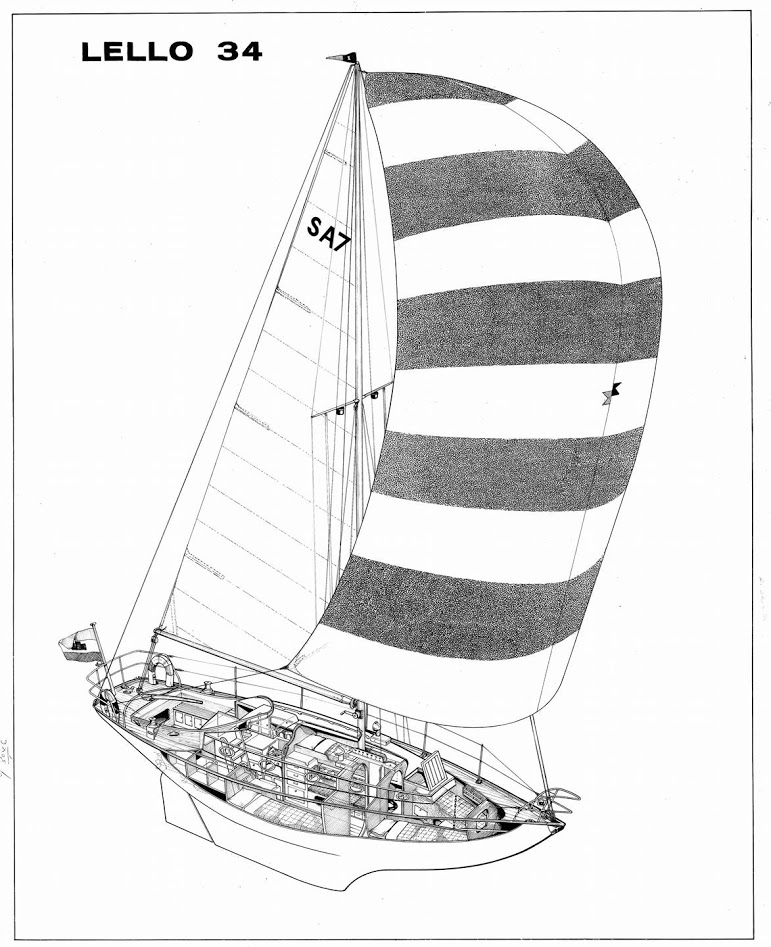
The Lello 34 originated in South Africa in the mid-1960s. Bryan Lello designed it around 1966, and most examples are believed to have been built by Henry Vink in Walkerville, near the Vaal Dam.
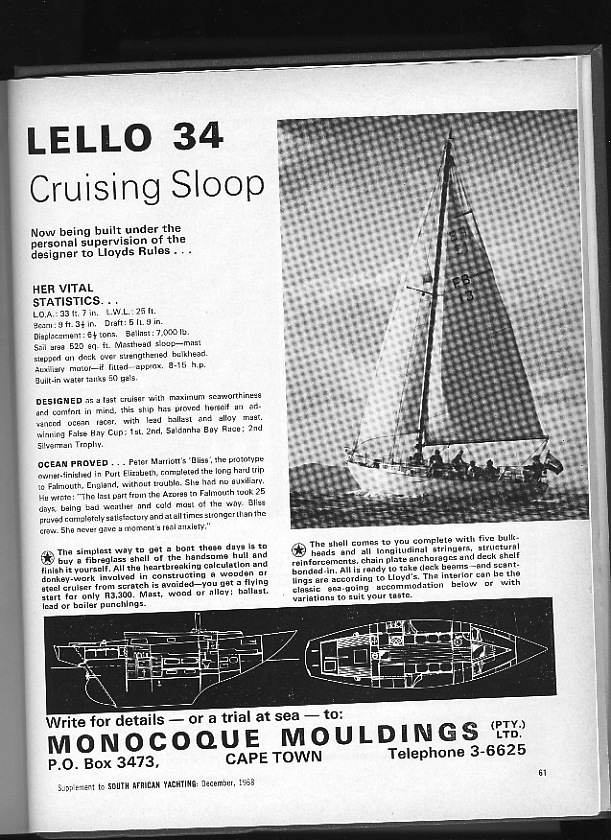
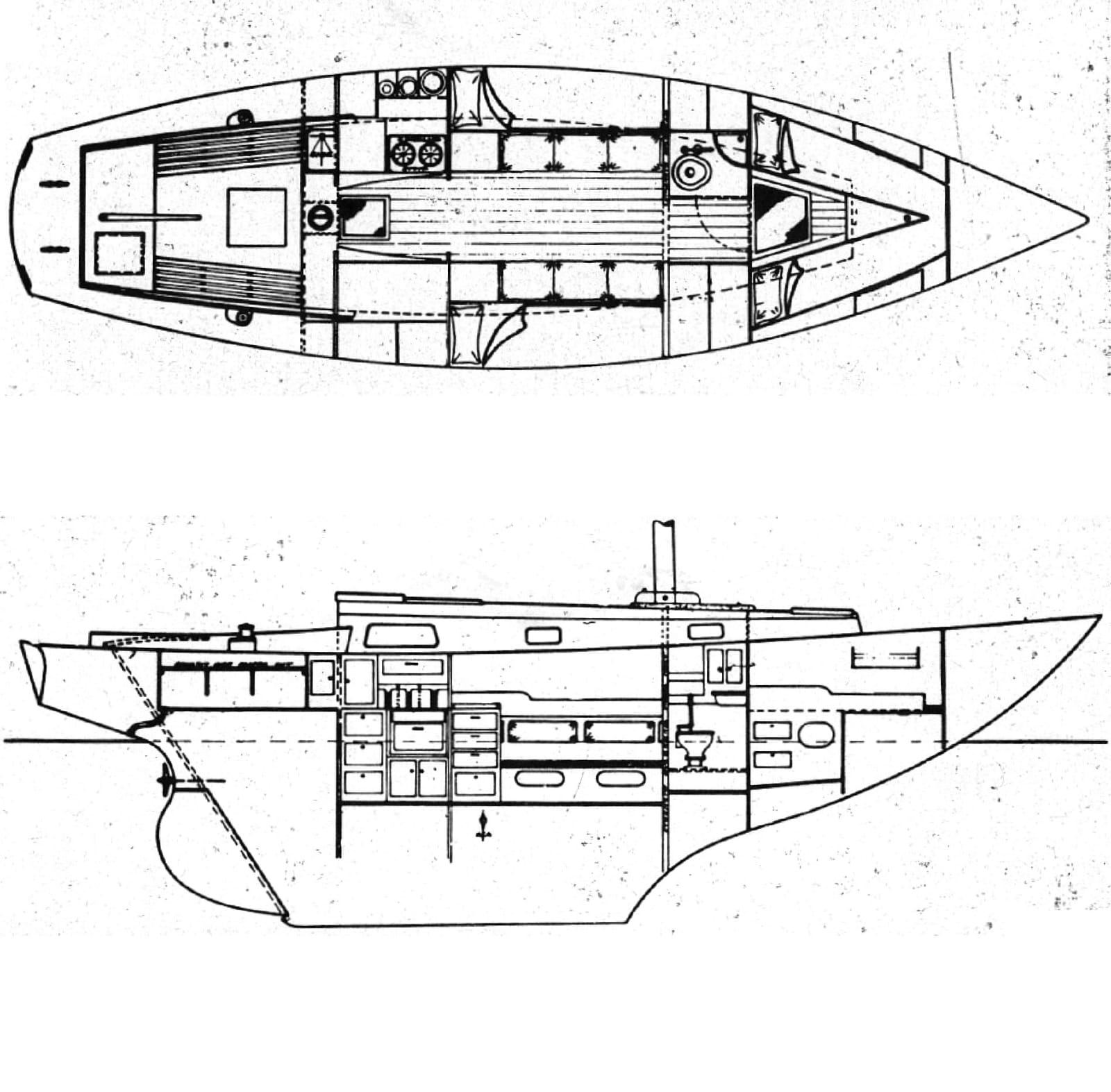
She has classic lines: a long keel, aft rudder and masthead sloop rig, with a large genoa and a long boom. A 1968 advertisement shows the model’s specifications at the time. According to an article on the SA Yacht Blog, the design may have been connected with plans for the first Cape to Rio race, held in 1971.
The same article describes a sturdy, seaworthy yacht that took part in races and passages along South Africa’s demanding coast. Less is known about the history of each individual boat; this is the story of the model to which Lady Cila belongs.
Source: Justin Phillips, “Lello 34”, SA Yacht Blog (2016). The historical specifications below come from a December 1968 advertisement supplied by the owner. They describe the model, not verified measurements of Lady Cila; metric conversions are approximate.
Work carried out by Vitaliy from 12 September to 20 October 2026, based on his report and photographs.
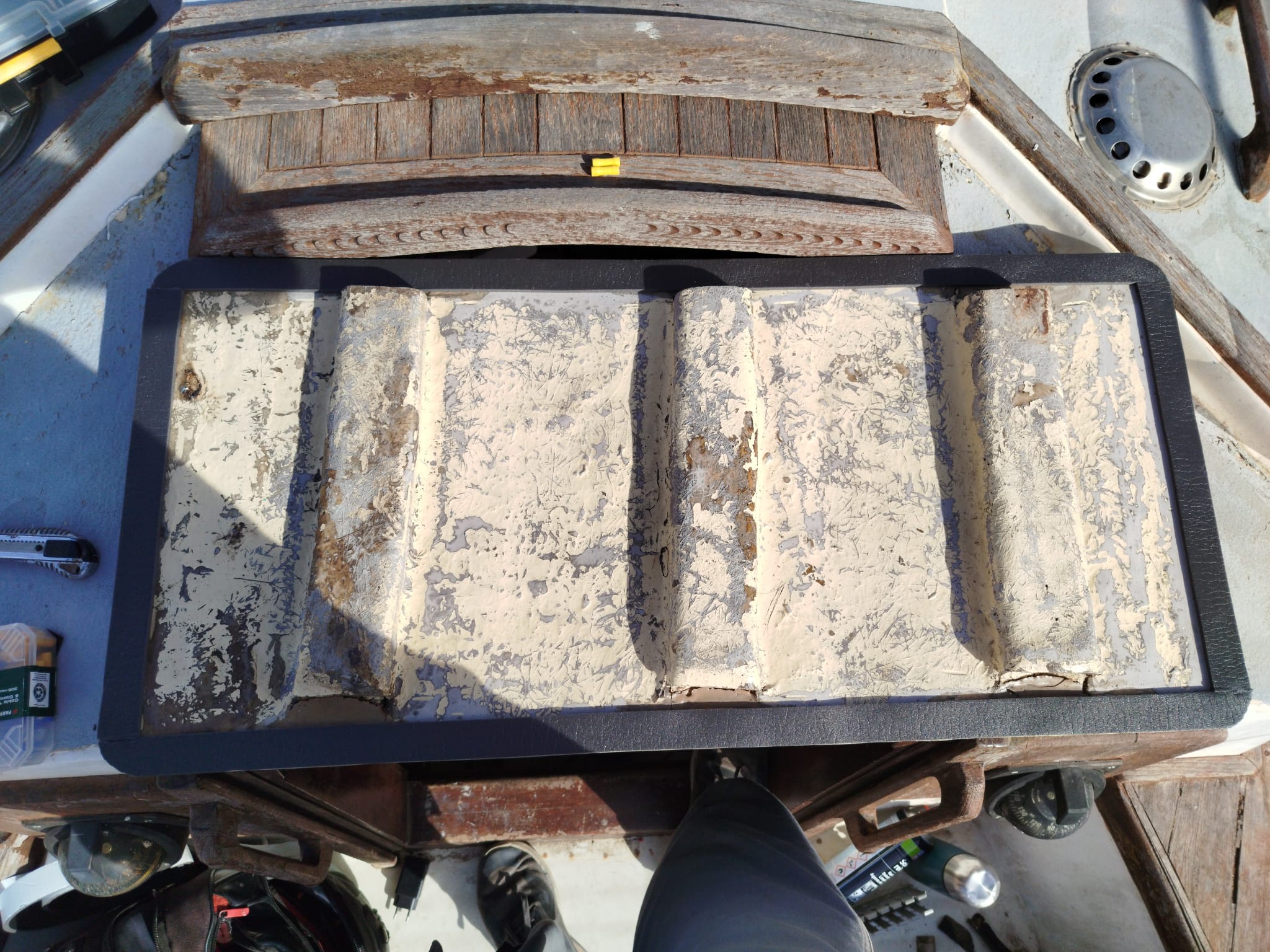
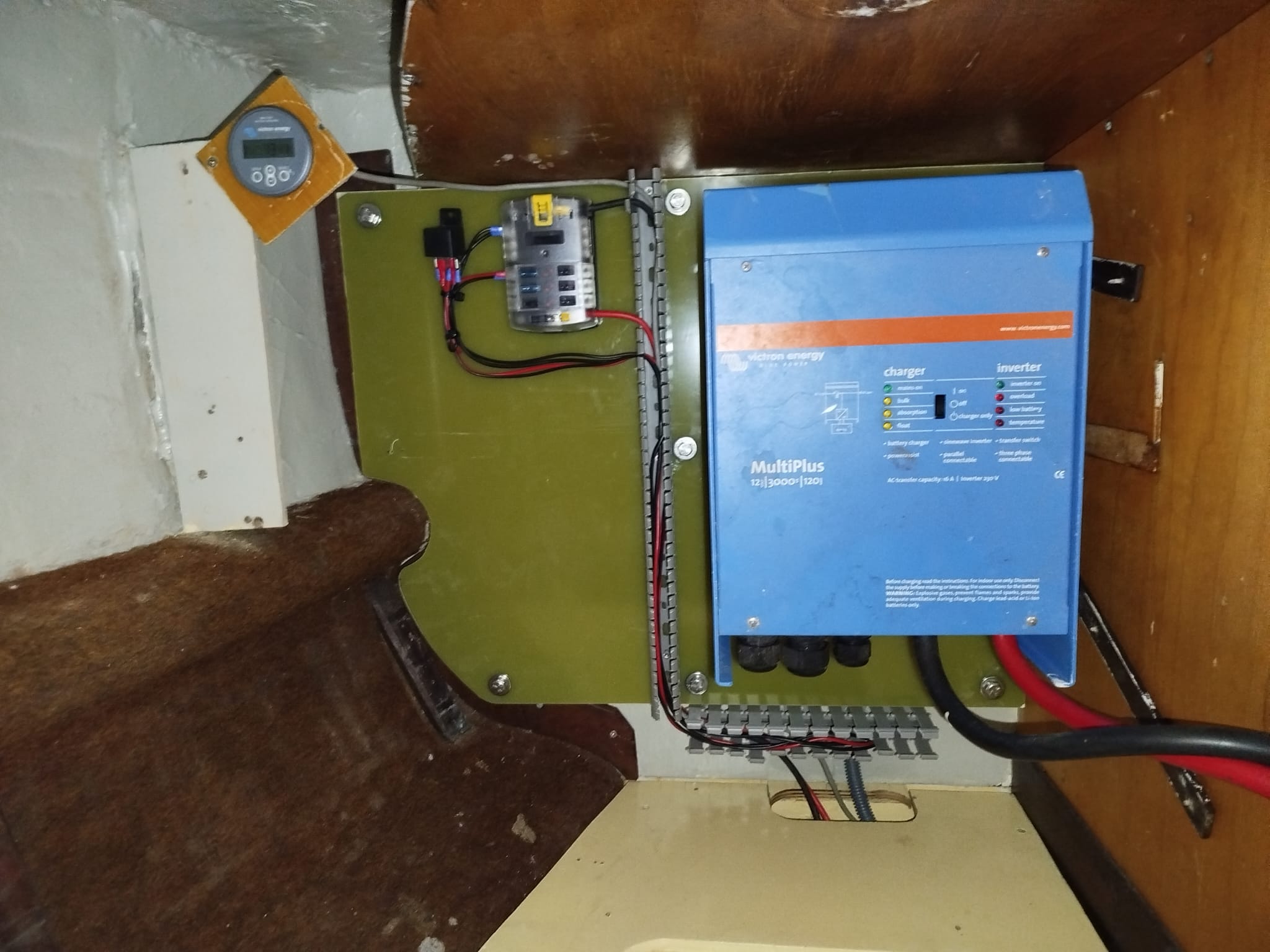
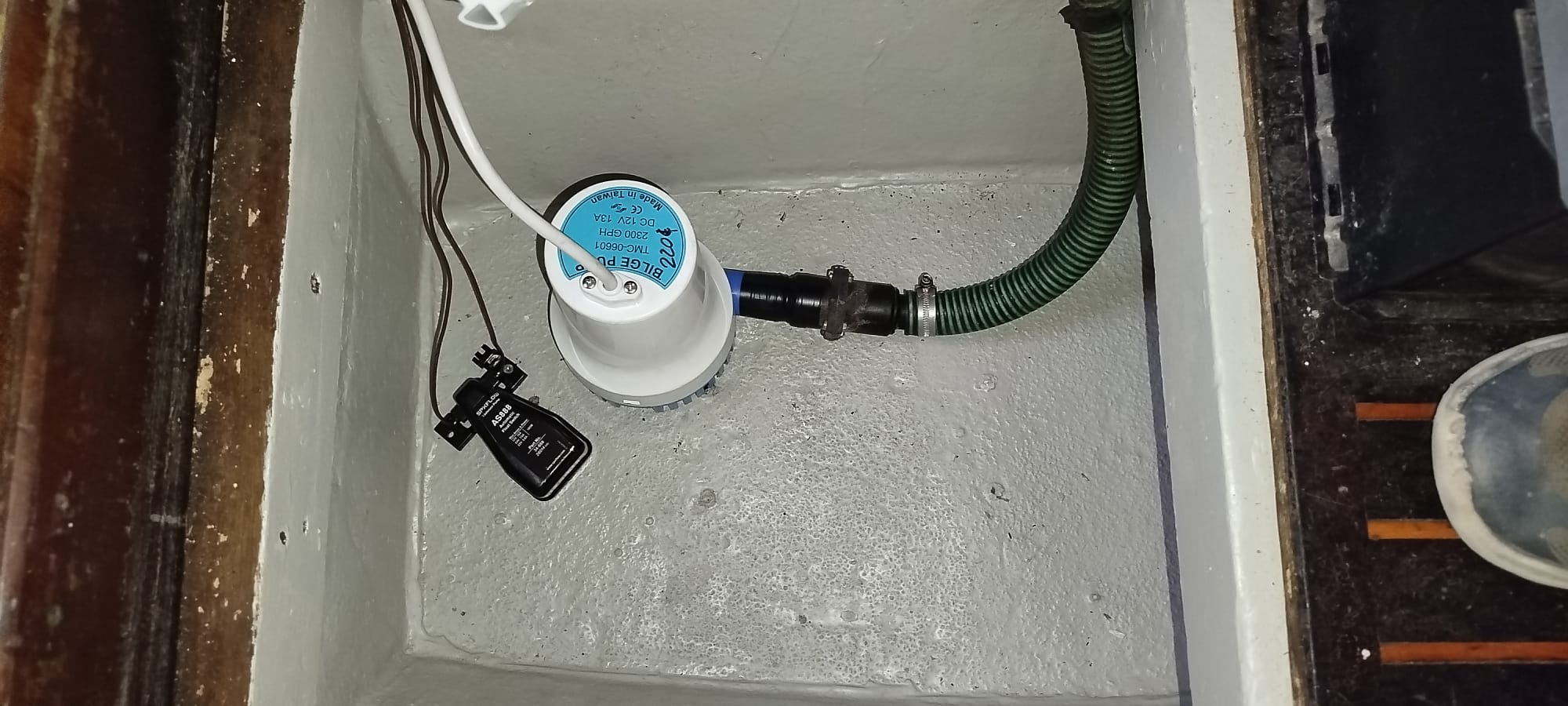
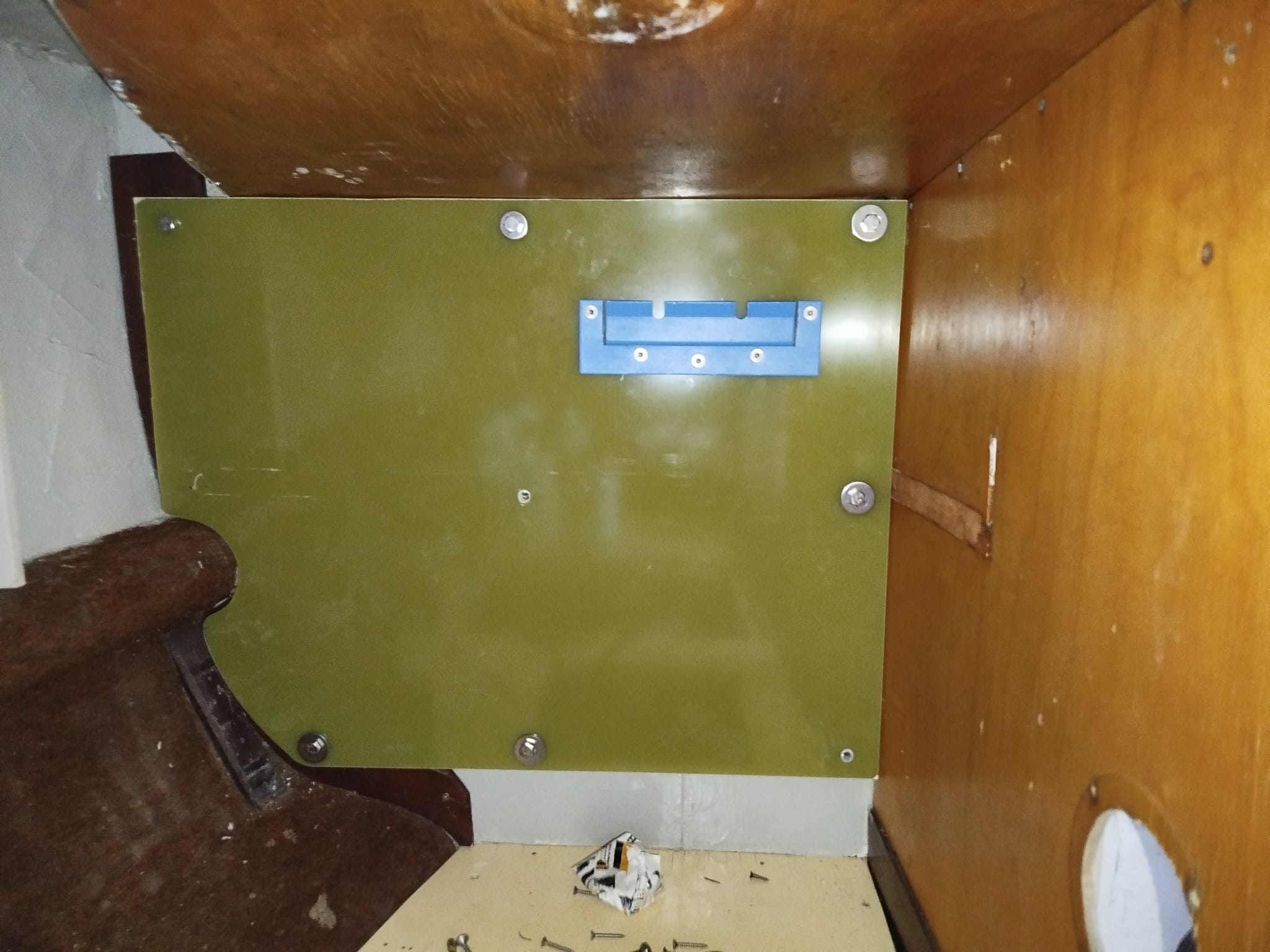
The hatch over the water and fuel tanks was removed and cleaned. The old gasket was replaced with adhesive rubber, the timber joints were sealed with Sikaflex 591 and the raised sections were secured again.
The inverter/charger was mounted in position. Cable ducts and the fuse box were fitted, and new routes were prepared for the bilge circuits and shore power. The 230 V installation remains to be completed.
The pump and float switch were connected to the fuse box. Discharge was temporarily routed outside through a green hose; the permanent outlet and replacement non-return valve are still pending. A second automatic pump was tested and proposed for installation.
A fibreglass mounting plate was cut and prepared for the electrical equipment, with eight M8 fixing points. The timber box was secured and sealed, and the prepared surfaces received primer.
The battery space was primed and the box reinstalled. The MPPT controller, shunt and battery monitor were mounted in the battery area. The bilge pump and float switch were secured, with wiring and connections prepared in a junction box.
Loose paint removal and cleaning continued beneath the seats and in the central bilge area. A second coat of primer was applied, and the battery monitor was connected to observe solar charging.
The lockers beneath the seats were cleaned, timber joints sealed and prepared surfaces primed. The shore power inlet was connected and secured. The aft locker was also cleaned, and materials were reorganised in the forward cabin.
The solar panel was connected to the MPPT controller, then beneath the chart table, and began charging the battery. Solar cables were installed in 25 mm protective conduit with a sealed deck entry. The shore power cable was also routed towards the future electrical panel area.
A new extractor fan was installed, and the solar panel was mounted on the rail. Locker cleaning continued, an opening above the tank filler was protected and the technical water tank was washed.
Accumulated water was removed, galley and toilet areas cleaned and fungal growth treated. The tank was emptied and cleaned, ventilation openings cleared and temporary protection prepared for the windows and companionway.
The first visit included a general inspection of Lady Cila, sorting the existing wiring and setting restoration priorities: removing water, gathering materials in a dry space and protecting points of water ingress.
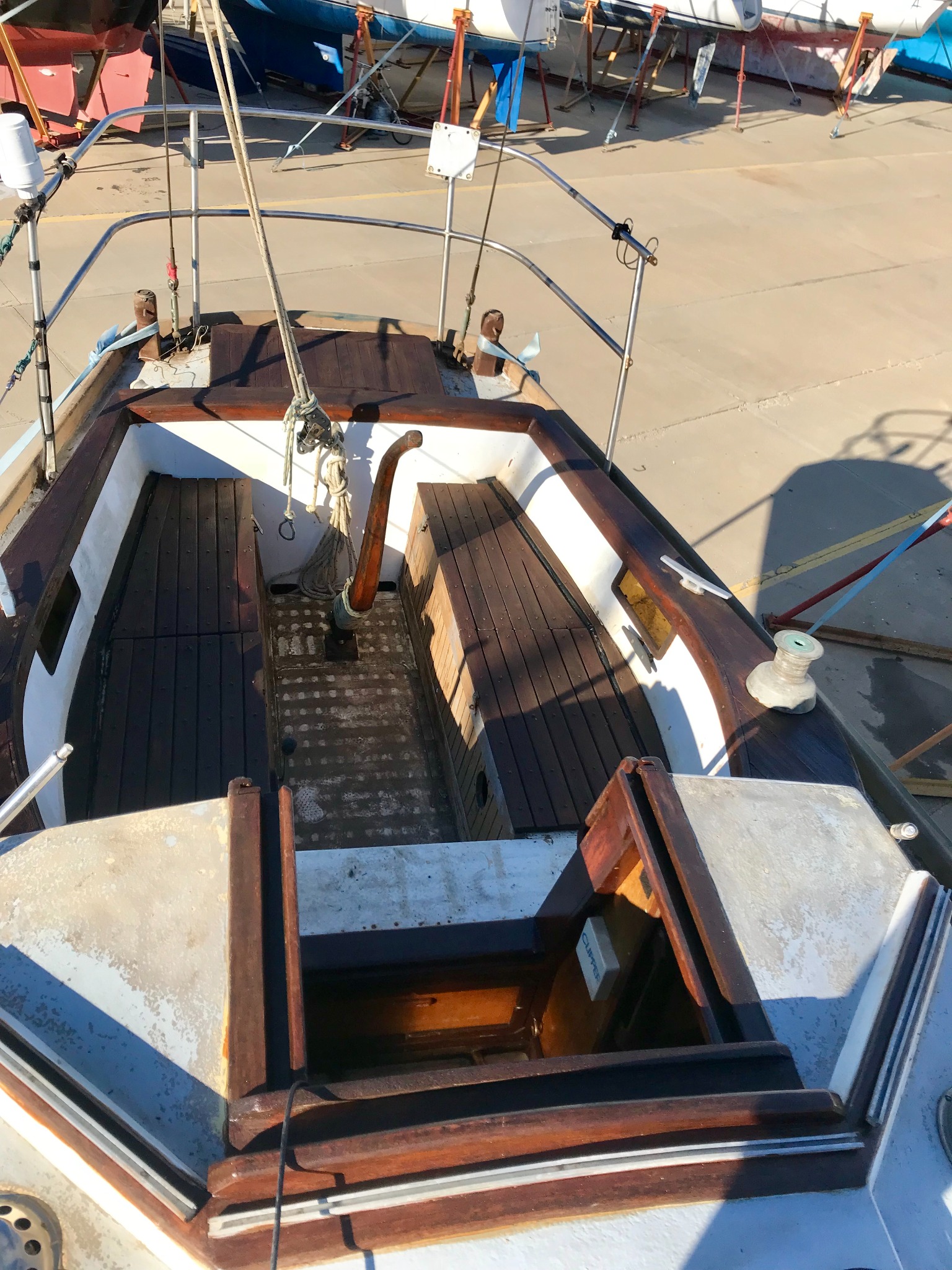
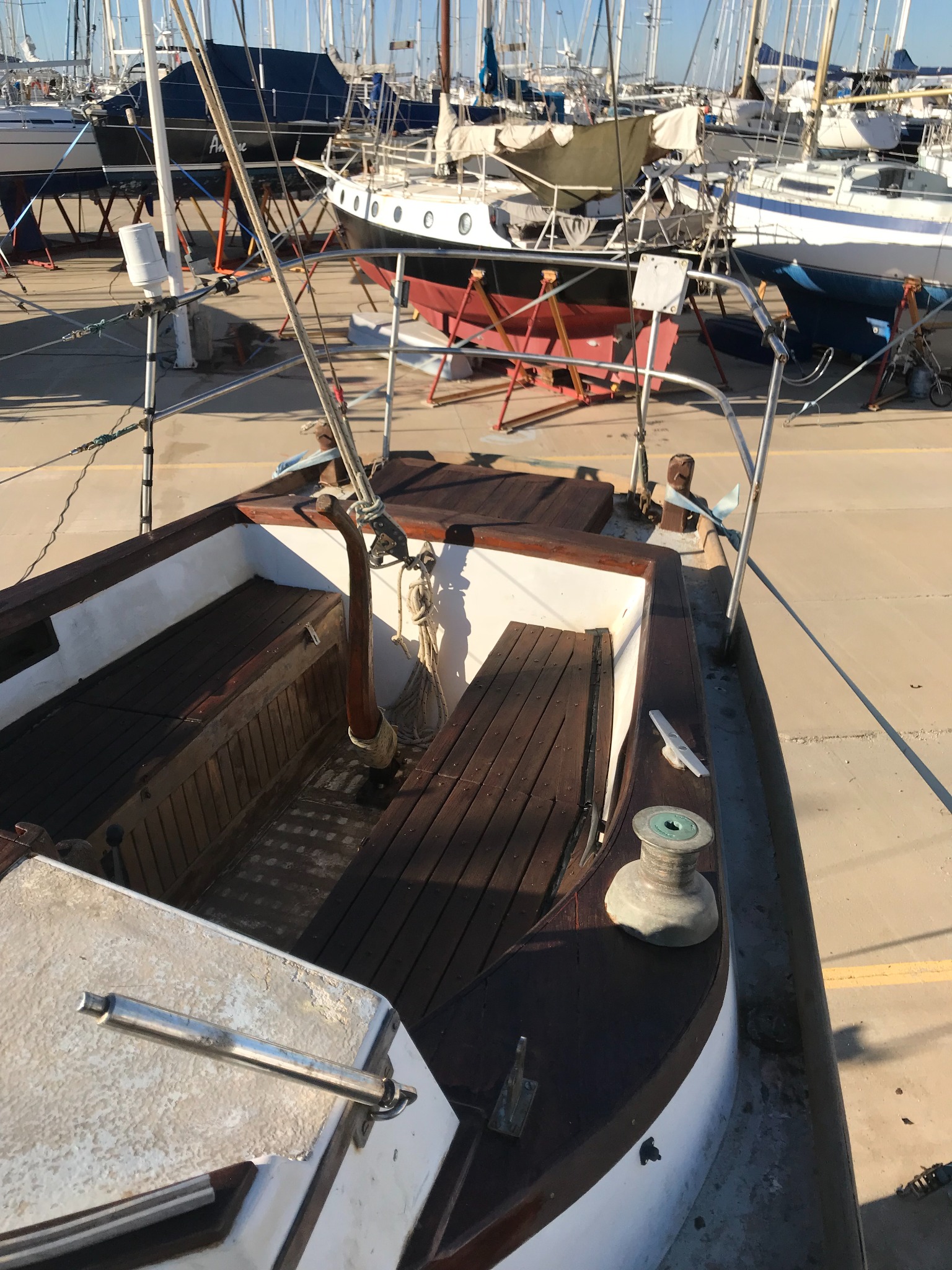
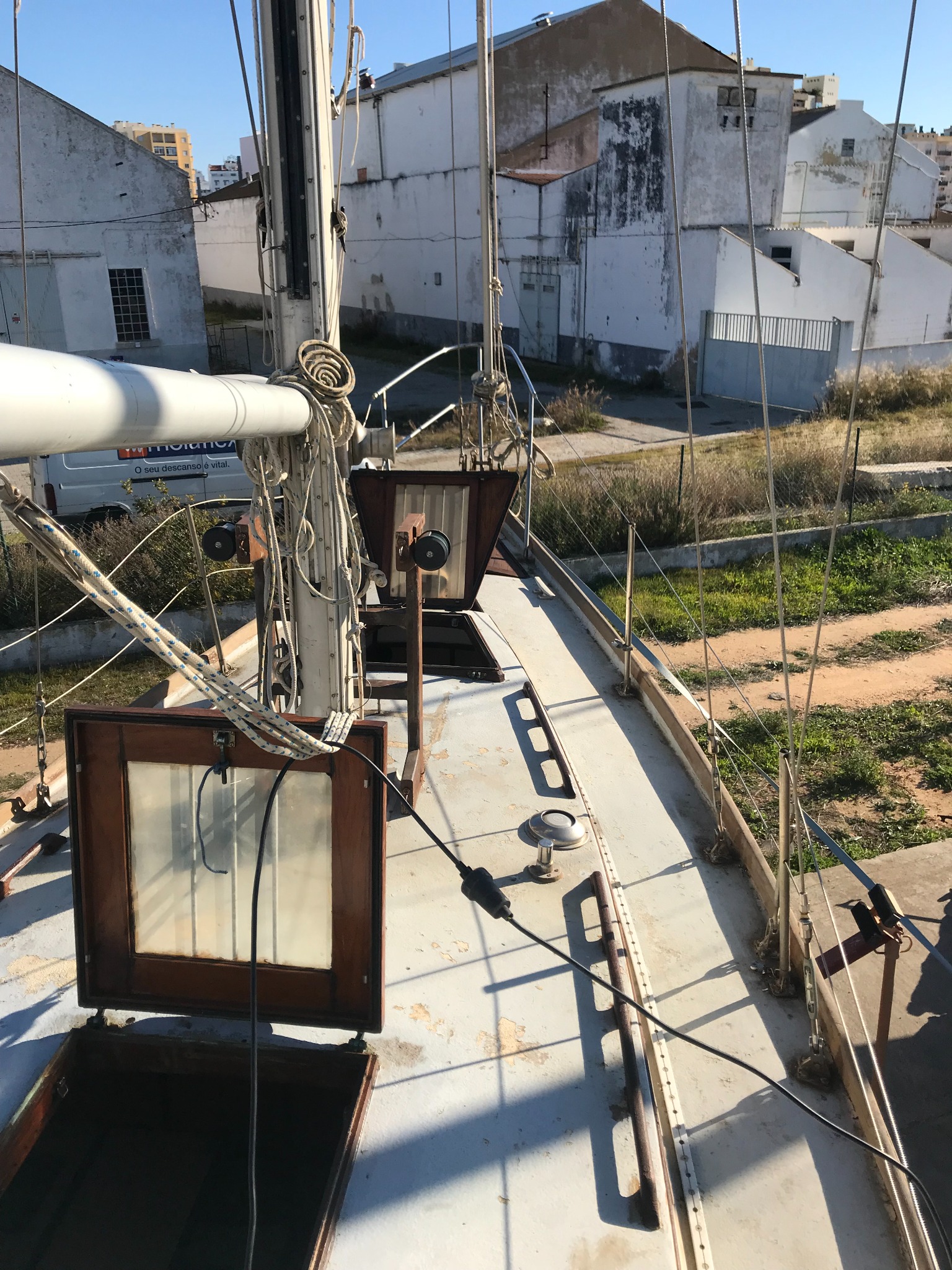
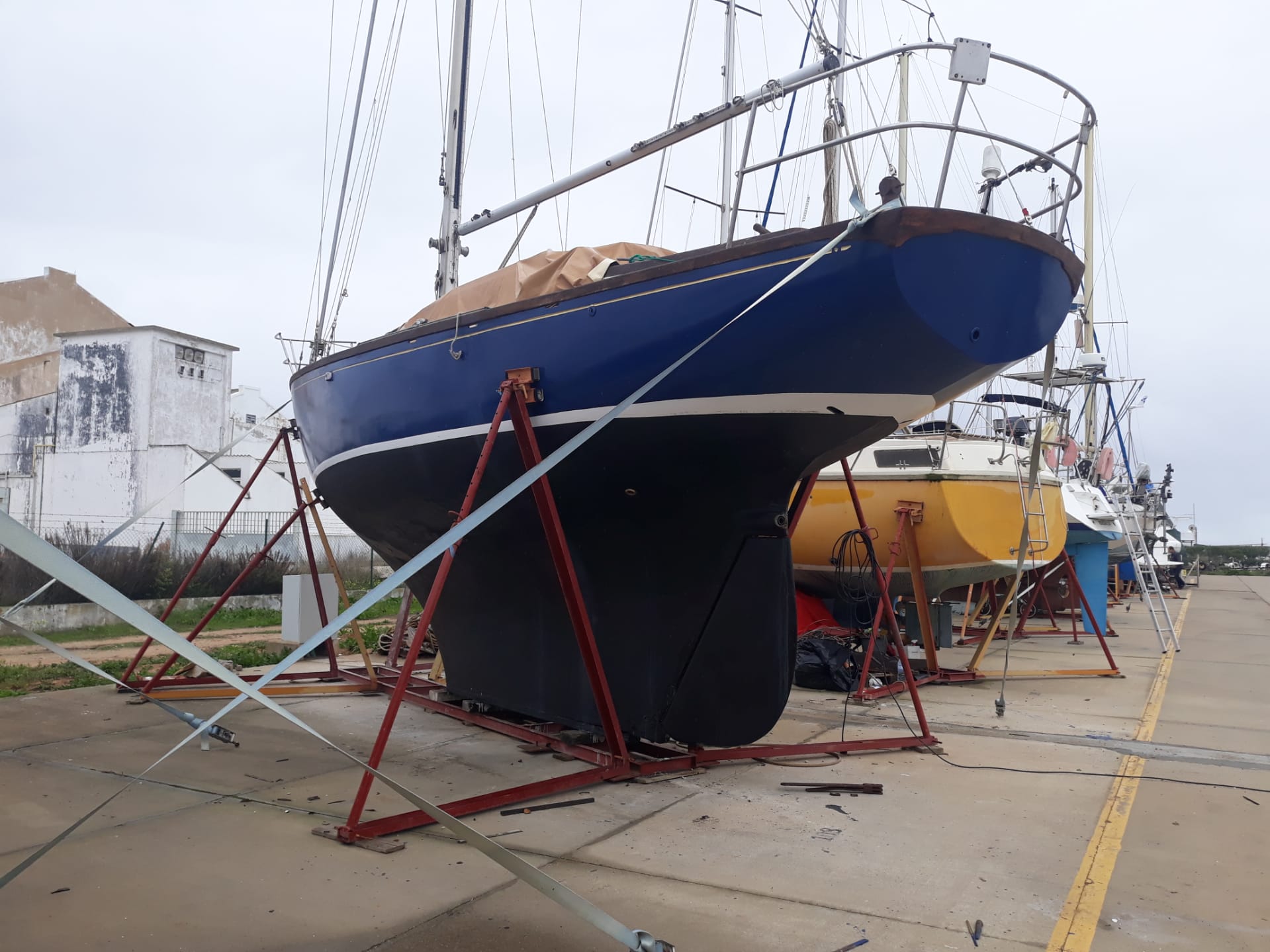
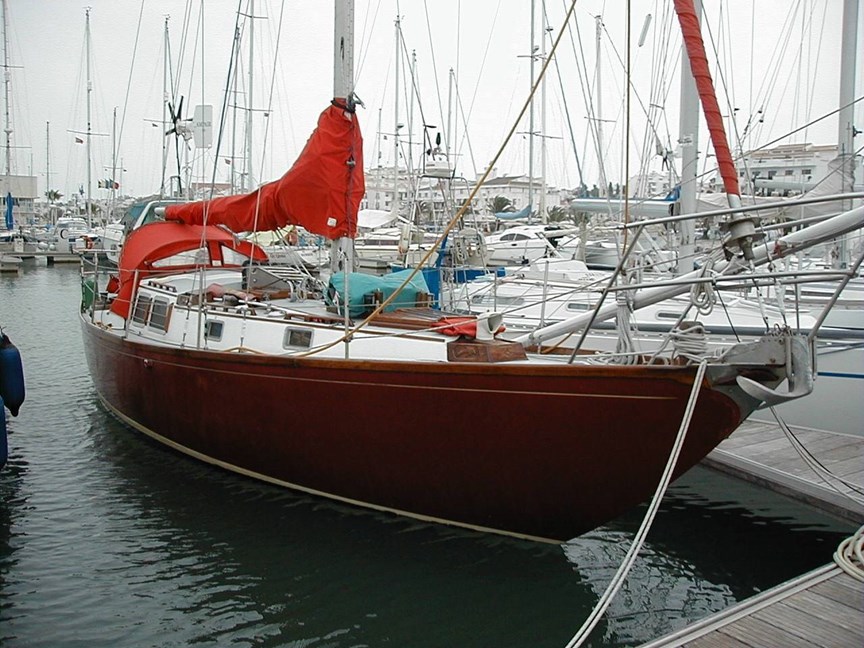
Photographs of Lady Cila at different times at the Nave Pegos boatyard. The cockpit and deck photographs date from 2019; current work will be documented as it progresses.